Not too long ago, I had a post (link here) about the fact that much of what is published in the medical literature are very poor quality studies, and the symbiotic relationship between academia and the media that hypes these studies up, thus sewing fear and confusion into the average person.
I really can’t stress this point enough. It’s not that most medical studies are good, with a few poor ones thrown in. It’s that a large percentage of what is published and reported on in the news sheds absolutely no light at all on how you can live a healthier life, and is often frankly misleading. So it’s a point worth revisiting over and over.
I just returned from vacation, and after an eight hour flight home, my lower back has been a little sore this week (thank you Lufthansa for the cramped seats!) Which got me thinking about the topic of low back pain, and that I have yet to comment on it on this blog.
Back pain is one of the most common conditions we see in adult primary care. It is also one in which the western model of medicine really falls down. To explain what I mean by this, let’s consider two other common diseases, and then consider back pain:
We will be closed for summer vacation from now until August 20th. Please note the following:
We will be traveling without perfect internet connection, so we will not be able to respond to messages on an urgent basis. If you are a current patient and are having an urgent issue, go to the nearest emergency room or to an urgent care center. You can leave us a message later telling us about it so that we can arrange any needed follow up as soon as we return.
If you have an issue that can’t wait for our return but isn’t an emergency (for example you need prescription refilled or you have a minor medical issue that you need assistance with), call or text the office and leave a message, and we will get back to you within 1-2 days. We also do have a trusted colleague who can see our patients for an in person visit for non-emergency issues, and if you indicate the need for such in your message, we can connect you to him.
If you are not currently a patient of ours but are interested in learning more about the practice, setting up a free “meet and greet” for after our return, or enrolling as a patient, you can still call the office and select the appropriate phone option. We have an outside business consultant who assists us with new patient inquiries, and she can field these calls on our behalf and assist you even in our absence.
Thank you for your understanding while we travel, recharge, and spend some time with our kids. We hope you are enjoying a happy and healthy summer.
In this election year, we are likely to hear politicians from both major parties blather on about their preferred solution for “healthcare.” I can accept that intelligent people, acting in good faith, can come to very different conclusions about how our system should be run in the United States, but what drives me crazy is how the very parameters of the debate indicate muddled thinking and an inability to clearly articulate the nature of the problem. So let me take a moment to briefly define three different terms that are often used interchangeably, but shouldn’t be, and then talk for a moment about why this matters:
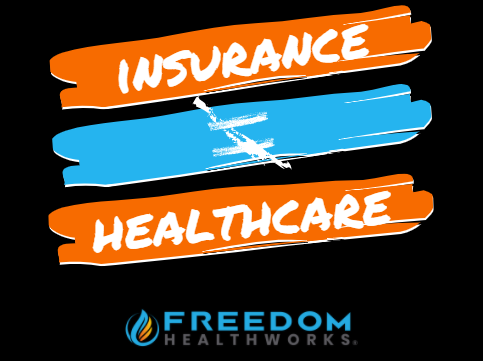
Health insurance is a mechanism by which we pay for healthcare. It is important to understand that it is NOT in and of itself healthcare.
Healthcare is the actual provision of health services to a patient. Healthcare consists of things like doctors, nurses, medications, tests,hospital beds, and surgical equipment.
Health is the absence of disease. A person who possesses good health will need little in the way of healthcare.
It’s crucial to keep the distinction between these three terms in mind as we think about our broken healthcare system. Our politicians talk endlessly about the need to reform “healthcare” or provide “healthcare for all,” or whether “healthcare” should be a right versus a privilege, but what they are really talking about is health insurance, NOT healthcare.
Direct Primary Care (DPC) is really so different from the sort of corporate medical practice that I spent the first decade of my career in (and that most patients are familiar with) that at times it’s hard to convey to prospective patients just how different their experience can be at an office like mine. So in keeping with the aphorism that “a picture is worth a thousand words,” I’ve decided to give a few brief vignettes in this post that I think better illustrate what I offer than any bullet-point list of services you’ll find elsewhere on my website.
A few weeks ago I was interviewed by Chris Habig at the Healthcare Americana podcast. The episode was released this morning, so if you have 30 minutes and want to hear me drone on about my practice, the benefits of direct primary care, what holistic medicine means to me, etc., click the link below: