For context, the carnivore diet is an extreme version of the keto diet that shuns all plant-based foods. Followers of this diet eat only meat, fish, and maybe eggs and dairy, without any fruits, vegetables, legumes, grains, nuts, or other plant-based matter. In effect, the carnivore diet is the precise opposite of a vegan diet.
To level-set this conversation, let me state that I do not personally follow the carnivore diet, nor do I typically recommend it to patients (except as a short-term elimination plan to help in figuring out allergies or food sensitivities). With that said, I have repeatedly stated on this blog that I am diet agnostic, meaning that while I believe there are some commonalities to healthy eating patterns – such as limiting processed foods and added sugars – there are many dietary paths to better health, and I respect individual variation in this matter.
We know that there are human societies that have essentially followed a long-term carnivore diet (e.g. the Inuit of the Arctic regions, or the Masai tribe in Africa) without any evidence of being unhealthy for it. We know that in actual studies, meat-heavy low-carb diets such as Atkins or Keto work very well for some people. And we know that, anecdotally, many people have reported going on the carnivore diet and experiencing big improvements in their health, from weight loss and diabetes remission to significant improvements in allergies, auto-immune disease, and mental health. It’s a completely fair question to ask if these folks wouldn’t have experienced similar benefits with other dietary approaches – perhaps it’s the absence of sugar and junk food, not the presence of meat that provides the healing – as well as whether this diet is conducive to long-term health. But as a doctor, I’m genuinely curious to know the answers to these questions, and open to the possibility that the folks who are self-experimenting with carnivore might in fact have hit on something that we can learn from.
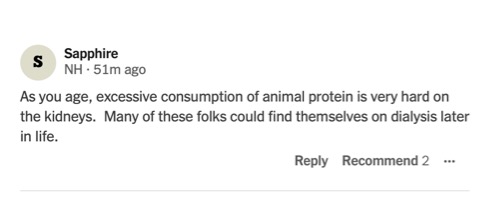
Enter the comments section of the NY Times. Instead of curiosity, it contains many vicious comments about the people featured in the article. In so doing, I believe it produces a great case study in human psychology, namely how humans can become tribal over almost any issue imaginable, and love being part of a mob that piles on those who are different from them.
Take for example this comment, which not only assumes that all carnivores will keel over of heart attacks (a legitimate concern, but one which is by no means settled, as there is no prior research on cholesterol and heart disease in those eating only a carnivorous diet), but looks forward to the day with glee:
Or this one, which claims to be written by a “clinician” who implies she will not help such patients. I find this comment genuinely alarming – failing to act in your patients’ best interests or, worse, actively wishing for their harm (even when you may disagree with their choices) is a severe breach of medical ethics and should have no place in the medical profession:
Or this comment, which wonders why the folks following carnivore don’t simply listen to the experts without any recognition of the fact that the experts in healthcare have a pretty mixed track record. I’m not advocating that people DON’T listen to the experts, but let’s have some humility and admit that a person whose own experience is one of healing on a carnivore diet might be inclined to trust their own experience over that of a researcher who they have never met:
None of this is a defense or endorsement of the carnivore diet about which – I agree – there are very legitimate reasons to maintain skepticism. But it is interesting (though unfortunately not shocking) to note that people who presumably would not withhold compassion from an alcoholic dying of cirrhosis or a smoker dying of lung cancer seem quite gleeful about the prospect of regular steak consumers dying of heart attacks and colon cancer. This quite apart from the fact that there are no studies in long-term carnivore dieters, and thus we can’t even be certain that their diet will in fact cause heart disease or colon cancer.
It’s also remarkable how self-assured these people are, how much faith they are willing to put into the idea that the “science is settled” about issues around nutrition that are in fact still quite contested, and how unwilling they are to be curious about the fact that many people are doing carnivore and feeling much better for it. This is all the more ironic given that the stereotypical New York Times reader is probably somebody who prides themself on being open-minded and intellectualy curious in many other areas of their life.