1-508-719-9605
345 Front St., Suite 1, Marion, Massachusetts 02738
info@drfischermd.com
Dr. Fischer, MD
  • Home
  • Bio
  • Services & Pricing
  • Direct Primary Care
  • FAQ
  • Blog
  • Contact Us
Home Microbiome The Roman Diet
2Sep

The Roman Diet

by Joshua Fischer

This post is just for fun, and light on science. So if you’re looking for something firm to hang your hat on, skip it. On the other hand, if you want to be bored by my personal thoughts, read on. 

Regular readers of this blog will have picked up on the fact that two of my biggest interests are 1) preventative medicine, and 2) history, and that these are two topics that I sometimes intermingle. For example, some time back I created a short post on ancient Roman military training and what it can teach us about exercise today. I also gave a lecture a few years ago in which I touched on ancient Roman lifestyle habits and how many of these weave nicely with what modern science has to teach us about good health. 

Today, I’d like to briefly return to this topic by discussing how the ancient Romans ate. But before doing so, I want to make two points:

  1. The ancient Romans lived, on average, much shorter lives than we do. So it’s not that we should copy their world completely.

    But as the old saying goes, there are “lies, damned lies, and statistics,” and in point of fact a major reason that average life expectancy in Rome is estimated to have been about 30 years is that roughly half of all people in the Roman empire died in childhood. Of those who did survive to adulthood, many young women died in childbirth, and many young men died of traumatic injuries (being a Roman soldier, or building aqueducts by hand, turns out to have been dangerous work). As a result, an enormous percentage of the population died at a very young age, which brought the average life expectancy down considerably. But of those who didn’t die young, many went on to live a fairly full life, and in point of fact quite a few Romans lived into their 60s, 70s, and 80s. And while we have no way of knowing exactly what happened to these folks, there are many lines of evidence to suggest that they suffered less than we do from obesity, diabetes, cancer, heart disease, or dementia. The point being, there might be some things these ancient folks can teach us about how to age well, despite the fact that the majority of them never got the chance to.
  2. Secondly, I am using Rome only because it is such a cultural touchstone of ours, but there’s nothing unique to Rome in what I am discussing. Substitute in any other pre-modern civilization – the Persians, the Ottomans, feudal Japan, or whomever you choose – and you could likely draw a lot of the same insights. 

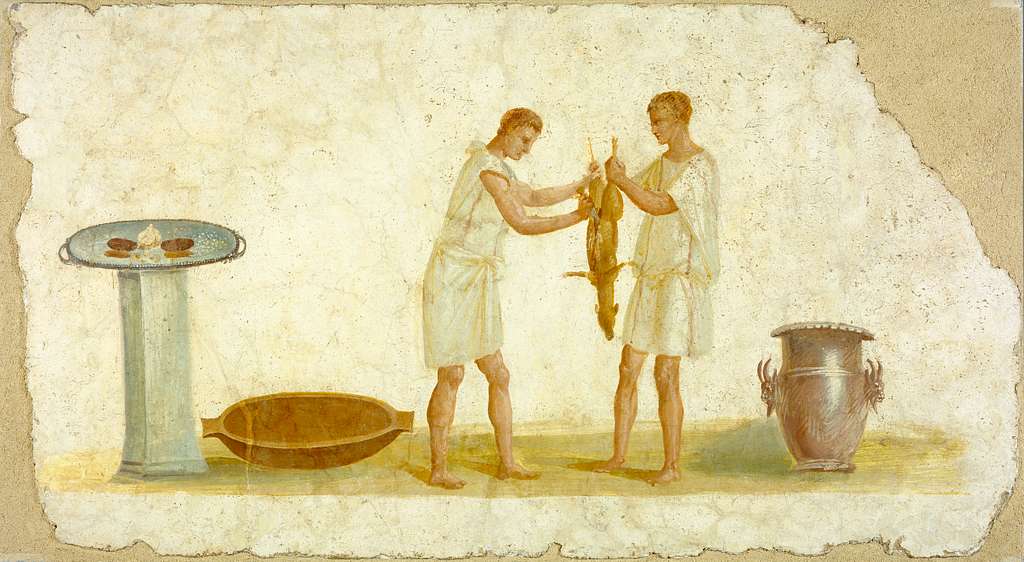
With that out of the way, what did the Romans eat, exactly? We do have a fair amount of historical evidence on this front (several cookbooks from ancient Rome survive to this day, for example, and amongst the well preserved archeological remains at Pompei are included many restaurants). Therefore, historians are reasonably confident that a “typical” Roman (which is to say a citizen who was part of what we might now call the middle class, i.e. somebody who was neither extravagantly wealthy nor desperately poor) would have frequently consumed the following foods:

  1. Whole grain sourdough bread
  2. Porridges made of whole wheat or barley
  3. Olive oil and olives
  4. Red wine
  5. Cheese
  6. Fresh fruit
  7. Vegetables
  8. Beans
  9. Eggs
  10. Fish

If we think about this pattern, we’ll note a few things. Firstly, that it contains no processed or packaged foods (duh). Secondly, the diet is high in fiber and plant matter. Third, it is low in sugar (in fact the Romans didn’t have table sugar the way we do, though they did eat fresh fruit and honey to satisfy their sweet tooth). Fourth, it contains a fair amount of fermented foods (sourdough bread, cheese, wine), which we now know helps to nurture a diverse and healthy gut microbiome. Fifth, it is not per se low fat, but it is low in saturated fats and, of course, is completely devoid of the industrial and processed oils that are common in the modern western diet. 

In fact, if we examine the above diet, we’ll note that it is pretty consistent with the dietary pattern that modern nutritionists call the “mediterranean diet,” still followed in many parts of Greece, Italy, Spain, and other mediterranean countries, and which numerous studies have shown is a healthy eating pattern for reducing the risks for obesity, diabetes, and cardiovascular disease.  

Therefore, one way to look at healthy eating patterns is that they are something to be discovered by modern scientists. But another is that they are something to be re-discovered from our pre-modern ancestors who by a mixture of intuition and limited options (Burger King, sodas, and packaged chips just weren’t available to anybody living prior to a few decades ago) tended to follow, at least in some regards, a healthier eating pattern than we do.

One suggestion I often give my patients is to forget for a moment about fat, calories, protein, etc, and simply try never to eat a food that didn’t exist a century ago. If you follow no rule other than that, you will likely have a healthier diet than about 90% of modern Americans.

Categories:
Categories
  • Microbiome
  • Nutrition
  • Roman

Post navigation

Previous Post Prunes, Prunes – They’re Good For Your Bones
Next Post Free Esophageal Cancer Screening

Categories

  • Direct Primary Care
  • Tests
  • Nutrition
  • Weight Loss
  • Roman
  • Exercise
  • Insulin Resistance
  • Metabolic Health
  • Holistic Medicine
  • Red Light
  • Sleep
  • Back Pain
  • Study Reviews
  • Cholesterol
  • Social Commentary
  • Book and Film Reviews
  • Microbiome
  • Circadian Health
  • Medical Topics
  • Temperature Exposure
  • Dementia
  • Osteoporosis
  • Cancer
  • Good Podcast Episodes
  • Supplements
  • How To Read Medical Studies

Date Posts

May 2026
M T W T F S S
 123
45678910
11121314151617
18192021222324
25262728293031
« Apr    

Recent Posts

What is Direct Primary Care and How Does it Lead to Better Care?

What is Direct Primary Care and How Does it Lead to Better Care?

February 26, 2024

Don’t Panic: 2026 Will Not Be Like 2020

May 19, 2026

A Case Study in Health Tribalism: Or How To Be Close-Minded in the Name of Being Enlightened

May 12, 2026

The Nine Lives of Aspirin

May 5, 2026

Study and Supplement Review: Resistant Starch

April 28, 2026

Vacation Week

April 20, 2026

Can Intermittent Fasting Fight Cancer? 

April 14, 2026

The Best Exercise For Blood Pressure

April 7, 2026

Update on “The Cholesterol Code” Film

March 31, 2026

More Thoughts on Cholesterol, Disease of Civilization, and a Historical Perspective on Medicine

March 24, 2026

Thoughts on Statins and More Bad Reporting

March 17, 2026

Understanding How to Read Medical Studies: Relative Risk, Absolute Risk, and Number Needed to Treat (NNT)

March 10, 2026

Intermittent Fasting and Crohn’s Disease

March 3, 2026

Some Inspiration From Spain

February 25, 2026

Updated Thoughts on the Keto-CTA Study

February 17, 2026

Film Screening: “The Cholesterol Code” April 13th at AMC 11 Dartmouth Mall

February 9, 2026

High Intensity Interval Training (HIIT) Is Great For Your Heart

February 3, 2026

Understanding How To Read Medical Studies: “Power” 

January 27, 2026

NAD+ Part 2

January 20, 2026

NAD+ Part 1

January 13, 2026

The Overdiagnosis Crisis

January 6, 2026

End of Year Thoughts

December 16, 2025

Are Liquid Biopsies The Future Of Cancer Detection?

December 9, 2025

Coronary Artery Calcium Scores, Physical Fitness, and How Not To Die

December 2, 2025

Happy Thanksgiving

November 25, 2025

RFK, MAHA, Saturated Fat, and the Media

November 18, 2025

The Doctor Won’t See You Now

November 11, 2025

Random Thoughts on Serena Williams, Ro, and Ozempic

November 4, 2025

Bad Study Of The Week: Lead and Protein Powder

October 28, 2025

Medical Testing Can Sometimes Be Harmful – Part 2

October 21, 2025

Medical Tests Can Sometimes Be Harmful – Part 1

October 14, 2025

This Is Your Brain On Lithium

October 7, 2025

A Good Podcast Episode About Sleep

September 30, 2025

A Long and Rambling Post on Loneliness, Wine, Europe, Health, Charlie Kirk, and the Impossibility of Medical Certainty

September 23, 2025

Exercise and Visceral Fat: 

September 16, 2025

Free Esophageal Cancer Screening

September 9, 2025

The Roman Diet

September 2, 2025

Prunes, Prunes – They’re Good For Your Bones

August 26, 2025

Summer Vacation: Aug 11-22

August 8, 2025

Good News – With Some Caveats – About Alzheimer’s Disease

August 5, 2025

Bad Study Alert: Olive Oil Makes You Fat! (No, It Doesn’t)

July 29, 2025

The Fountain of Youth

July 22, 2025

My Thoughts on Ozempic/Wegovy/Etc

July 15, 2025

The Primary Care Crisis in Massachusetts

July 8, 2025

No, Bottled Water is NOT Better For You

July 1, 2025

Farmer/Suitcase Carries

June 24, 2025

Dr. Fischer, MD – Now Licensed in Three States!

June 17, 2025

No, Protein Is Not Bad For Your kidneys

June 10, 2025

The Connection Between Arthritis and Metabolic Health

June 3, 2025

Type 2 Diabetes Is a Curable Illness

May 27, 2025

Part 3: Is the Keto Diet Bad For Your Heart? 

May 20, 2025

Saunas Are Great For You

May 13, 2025

Thoughts On Intermittent Fasting

May 6, 2025

The Wisdom Of Humor

April 29, 2025

On Health Ideas as Religion, and Being Humble

April 15, 2025

Dance Your Way To Better Health

April 8, 2025

Personal Fat Threshold

April 1, 2025

Bad Study Review: Butter v. Plant Oil

March 25, 2025

Happy St. Patricks’ Day – A Nice Story From Ireland

March 17, 2025

Further Thoughts on COVID, Vaccines, and The Need For Us All To Be More Open Minded and Less Tribal

March 11, 2025

On COVID Vaccines, and the Vanishing Middle Ground

March 4, 2025

We Are Weaker Than Our Grandparents Were

February 25, 2025

Thoughts on Veganism

February 17, 2025

Happy Birthday To Us

February 11, 2025

Tamiflu is Not Your Friend

February 4, 2025

The Importance of Strength Training for Women 

January 29, 2025

How Muscle Is Like Your Bank Account

January 21, 2025

Attention Insomniacs! Lecture at Marion Council On Aging Monday January 14th at 1pm

January 11, 2025

New Year’s Resolutions and Getting More Fit in 2025

January 7, 2025

Happy Holidays!

December 20, 2024

Continuous Glucose Monitors (CGMs) Are Available Over The Counter!

December 17, 2024

Book Review: Good Energy by Dr. Casey Means

December 10, 2024

We Need a Little Sunshine

December 3, 2024

Thanksgiving with Dr. Reginald Bittermilk

November 26, 2024

Practice Medicine by Subtraction, Not Addition

November 19, 2024

100!

November 12, 2024

Some Thoughts on Election Day 

November 5, 2024

How To Age Your Heart In Reverse 

October 29, 2024

Just How Harmful Is Alcohol? 

October 22, 2024

The New York Times Might Drive Us To Drink!

October 15, 2024

Film Review: Hack Your Health, on Netflix

October 8, 2024

Why Is Life Expectancy Falling?

October 2, 2024

Some Thoughts on Cholesterol

September 25, 2024

Part 2: Is The Keto Diet Bad For Your Heart?

September 17, 2024

Part 1: Is The Keto Diet Bad For Your Heart?

September 10, 2024

Bad Study Alert: Protein, Heart Disease, and the Academic-Media Complex

September 5, 2024

Bad Study of the Week

August 27, 2024

Some Thoughts on Back Pain

August 22, 2024

Vacation Information

August 3, 2024

Health Insurance Does Not Equal Healthcare Does Not Equal Health

July 31, 2024

Notes from my files – case studies in DPC

July 24, 2024
My Recent Podcast Interview

My Recent Podcast Interview

July 18, 2024

What Is the Best Diet?

July 10, 2024

The Corruption of Medicine Part 2: The Academic-Media Complex

July 2, 2024

EXTRA! EXTRA! READ ALL ABOUT IT!

June 28, 2024

The Corruption of Modern Medicine Part 1: The Faking of Data

June 25, 2024

Some Thoughts on that Infernal Jardiance Ad

June 20, 2024

Book Recommendation: Outlive by Peter Attia

June 18, 2024

Open House on Sunday June 30

June 13, 2024

Insomnia Part 5: How to Stay Asleep

June 6, 2024

Insomnia Part Four: What Pavlov Can Teach You About Sleep

May 29, 2024

Insomnia Part Three: The Sun and the Moon

May 21, 2024

Insomnia Part Two: How Sleeping is Like Playing Baseball

May 14, 2024

Insomnia Part One: Just How Bad Is Your Sleep, Anyway?

May 9, 2024

Yes, But What Are Processed Foods Anyway?

May 2, 2024

The Importance of Eating Naturally

April 30, 2024

The Importance of Dietary Protein  

April 25, 2024

Introducing Our Red Light Device

April 23, 2024

Vacation Week!

April 15, 2024

Styku Is Here!

April 12, 2024

Our Healthcare System is inhuman(e)

April 9, 2024

The Robber Baron and Circadian Biology

April 5, 2024

Three Studies That (Should) Blow Your Mind About Weight Loss

April 2, 2024

The Holistic Approach to Weight Loss

March 29, 2024

Why is a Holistic Approach to Medical Care Good for Patients?

March 26, 2024

Insulin Resistance Part 3 – How To Cure It

March 22, 2024

Insulin Resistance Part 2 – How To Diagnose It

March 20, 2024

Insulin Resistance Part 1 – What Is It?

March 19, 2024

How To Train Like a Roman

March 15, 2024

What My Coffee Machine Can Tell You About My Practice

March 12, 2024

My Lecture On Nutrition, Weight Loss, and Joint Health

March 7, 2024

 Tests You Should Have – But (Probably) Haven’t

March 4, 2024

Archives

  • May 2026
  • April 2026
  • March 2026
  • February 2026
  • January 2026
  • December 2025
  • November 2025
  • October 2025
  • September 2025
  • August 2025
  • July 2025
  • June 2025
  • May 2025
  • April 2025
  • March 2025
  • February 2025
  • January 2025
  • December 2024
  • November 2024
  • October 2024
  • September 2024
  • August 2024
  • July 2024
  • June 2024
  • May 2024
  • April 2024
  • March 2024
  • February 2024

Quick Links

Bio

Direct Primary Care

Service & Pricing

Contact Us

Listen & Learn

Contact Info

  • 345 Front St., Suite 1, Marion, Massachusetts 02738
    Get directions on the map
  • Phone: 1-508-719-9605
    Fax: 508-905-8129
  • info@drfischermd.com
Copyright © 2024 Joshua Fischer, MD
   508-719-9605