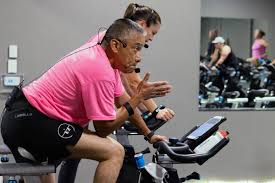
In recent years, High Intensity Interval Training (aka HIIT) has become quite popular. If you aren’t familiar with the concept, HIIT involves alternating brief rounds of very intense cardiovascular exercise with lighter activity. For example, instead of going for a light jog for 30 minutes, a person engaging in HIIT might sprint as hard as they can for one minute, then walk for one minute, and repeat the process five times for a total ten minute workout.
There are many, many, different HIIT protocols, with perhaps the most famously brief one being a “Tabata”, in which a person does intense exercise (say pedalling as fast as possible on a stationary bike) for 20 seconds, pauses for 10 seconds to catch their breath, and then repeats the process eight times for a total four minute workout.
The advantages of this type of exercise are obvious to the time-crunched person, and I indeed frequently recommend doing a “Tabata” a few times per week to the patient who tells me they have no time for exercise. There is also a psychological appeal to HIIT training for the person who doesn’t feel like they are getting a good workout unless they leave the gym soaked in sweat. Crossfit for example has long incorporated a lot of HIIT work into their programs, and if you know any Crossfitters you will be aware these are not the type of people who are content to just go for a light walk or a gentle yoga class. (That’s not a knock on CrossFit nor the people who enjoy doing it by the way – the world contains many different personality types, and it’s great to have different fitness modalities that cater to these differences. It has simply been my experience that CrossFit tends to attract the “type A” personalities of the fitness world, people who really enjoy a workout that pushes them to the absolute brink of what they are physically capable of on a regular basis).
In the study, the research team (which was based in Norway) took 60 people who had recently had a stent placed for coronary disease. All patients received medically standard care, including advice to follow a mediterranean style diet, to not smoke, and to engage in regular exercise of their choice, as well as medications to lower cholesterol and blood pressure.
The researchers then took the patients and randomized them to two groups: 30 who received only the above, and 30 who additionally were given two supervised exercise sessions per week of HIIT. Specifically, the exercise protocol used was:
A 10 minute warm up
4 rounds of HIIT training on either a stationary bike or a treadmill as follows: the patients were instructed to go as hard as possible for four minutes followed by three minutes of light activity, and then repeat for a total of four times (So for example: pedal as fast as possible for four minutes, then pedal lightly for three minutes, then pedal as fast as possible for four minutes, then pedal lightly for three minutes, and again two more times for a total of four rounds). If you are keeping track, that makes for a total of 28 minutes of actual exercise.
Finally, they had a 5 minute cooldown (e.g. biking or walking slowly to catch their breath)
Taken in sum, that makes for a 10 minute warmup + 28 minutes of HIIT + a 5 minute cooldown = a total of 43 minutes. The participants did this twice per week, for 6 months.
At the end of the six month study, the researchers used an ultrasound technique to look at the plaque in each groups’ coronary arteries. In the control group, they found a very slight progression of plaque. In other words, the subjects had just slightly more plaque in their arteries after six months than they did at the start of the study, which is not bad given that these were patients with known coronary disease, and thus an extremely high risk for another cardiac event.
But the amazing finding was in group that participated in the HIIT exercise intervention: they actually had LESS plaque in their arteries at the end of the study than at the beginning.
In other words, “standard” medical care of a healthy diet, light exercise, and medication did a good job in that it prevented significant worsening of disease. That’s certainly nothing to be dismissive of, and it’s a demonstration of why many people now live for years and even decades after suffering a coronary event, whereas most patients prior to the era of modern medication (say in the 1950s or 1960s) were living on borrowed time once they developed heart disease.
But HIIT (at least in tandem with medical therapy) actually REVERSED coronary disease!
Put another way, in the old days, coronary artery disease almost always had the patient playing for a loss. With modern standard medical care, patients are now playing for a stalemate. But the addition of HIIT gives a patient the possibility of a win.
And by the way, an obvious disclaimer: if you actually have cardiac disease, please DO NOT start engaging in HIIT type training without first discussing it with your cardiologist. There are circumstances in which it can be dangerous for patients with cardiac disease to exercise too strenuously. So it is very important to first get the green light from your doctor.