In this election year, we are likely to hear politicians from both major parties blather on about their preferred solution for “healthcare.” I can accept that intelligent people, acting in good faith, can come to very different conclusions about how our system should be run in the United States, but what drives me crazy is how the very parameters of the debate indicate muddled thinking and an inability to clearly articulate the nature of the problem. So let me take a moment to briefly define three different terms that are often used interchangeably, but shouldn’t be, and then talk for a moment about why this matters:
Health insurance is a mechanism by which we pay for healthcare. It is important to understand that it is NOT in and of itself healthcare.
Healthcare is the actual provision of health services to a patient. Healthcare consists of things like doctors, nurses, medications, tests,hospital beds, and surgical equipment.
Health is the absence of disease. A person who possesses good health will need little in the way of healthcare.
It’s crucial to keep the distinction between these three terms in mind as we think about our broken healthcare system. Our politicians talk endlessly about the need to reform “healthcare” or provide “healthcare for all,” or whether “healthcare” should be a right versus a privilege, but what they are really talking about is health insurance, NOT healthcare.
Direct Primary Care (DPC) is really so different from the sort of corporate medical practice that I spent the first decade of my career in (and that most patients are familiar with) that at times it’s hard to convey to prospective patients just how different their experience can be at an office like mine. So in keeping with the aphorism that “a picture is worth a thousand words,” I’ve decided to give a few brief vignettes in this post that I think better illustrate what I offer than any bullet-point list of services you’ll find elsewhere on my website.
A few weeks ago I was interviewed by Chris Habig at the Healthcare Americana podcast. The episode was released this morning, so if you have 30 minutes and want to hear me drone on about my practice, the benefits of direct primary care, what holistic medicine means to me, etc., click the link below:
Many patients want to lose weight, either for health or aesthetics reasons, and the question of “what’s the best diet?” is one I’m asked frequently.
I’ve evolved my thinking on this in my years in practice. When I first started out, I used to recommend low-carb diets very frequently. And indeed, low-carb diets can work amazingly well. Both in numerous studies and in my experience with patients, there are a wide variety of low-carb diets (Keto, atkins, paleo, etc) that often work wonders. I still think that these diets are a great way to go for many people.
But I’ve also seen plenty of countervailing studies and patients, with the most obvious example being those folks who go onto a high-carb vegetarian/vegan diet and also see terrific results.
Given this, when I’m asked about the best diet, my quickest answer is to advise people to follow the diet that they feel they are most likely to enjoy and be able to stick to. Even if, hypothetically, there was one particular diet that truly worked best with your unique biology, it would be of little use if you hated it and burned out on doing it after just a few weeks.
But my real answer goes even a step further: you don’t need to follow a rigid “diet” at all. Rather, it’s often easier and more sustainable to adopt specific lifestyle principles that you can stick to indefinitely. What are these principles?
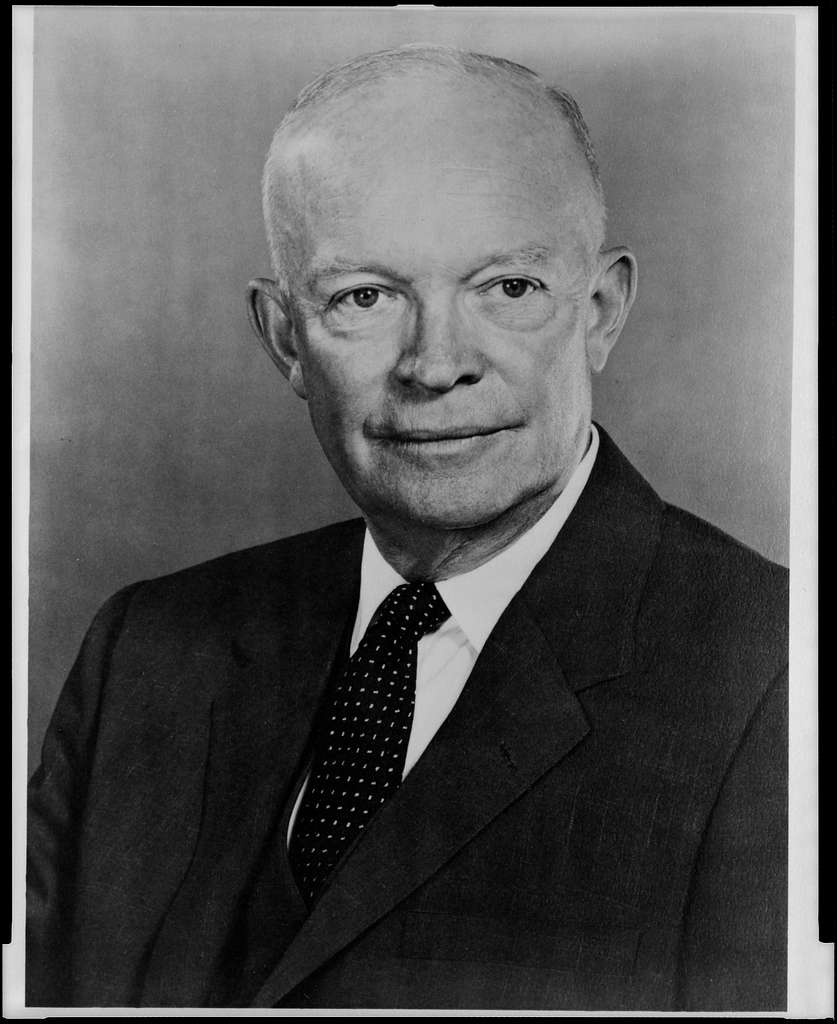
Just before leaving office at the end of his second term, President Dwight Eisenhower gave a speech in which he famously warned of the “military-industrial complex.” By this he meant that having large military budgets year after year was creating a powerful class of business interests who viewed the American military not simply as an institution vital to national security, but rather as a source of their own financial profits, and would hence forever exert pressure on the US government to increase military spending, regardless of whether it was otherwise appropriate to do so. This critique – which was shocking at the time – in retrospect seems rather obvious. Most observers of the US government now agree that there is an important interplay between the congress, the military, and the armaments industry, and the idea of a “military-industrial complex” is widely taken for granted.
Sadly, I see many parallels to the military-industrial complex in America’s modern medical system. Such as the way that pharmaceutical companies give generous donations to congressional members, who then pass legislation that is favorable to those companies. Or how the regulators of the pharmaceutical industry often obtain plum jobs with the pharmaceutical companies once they leave government, thus giving them an incentive while in office to “play nice” with them. Or how a small cadre of doctors sit atop the leadership at places like the NIH, controlling where grant money for research will go, thus creating an environment in which research that counters those doctors’ preferred ideas or theories is much less likely to receive funding.
But I want to talk about one such “complex” that particularly irks me, which I hereby will call the “academic-media complex.”