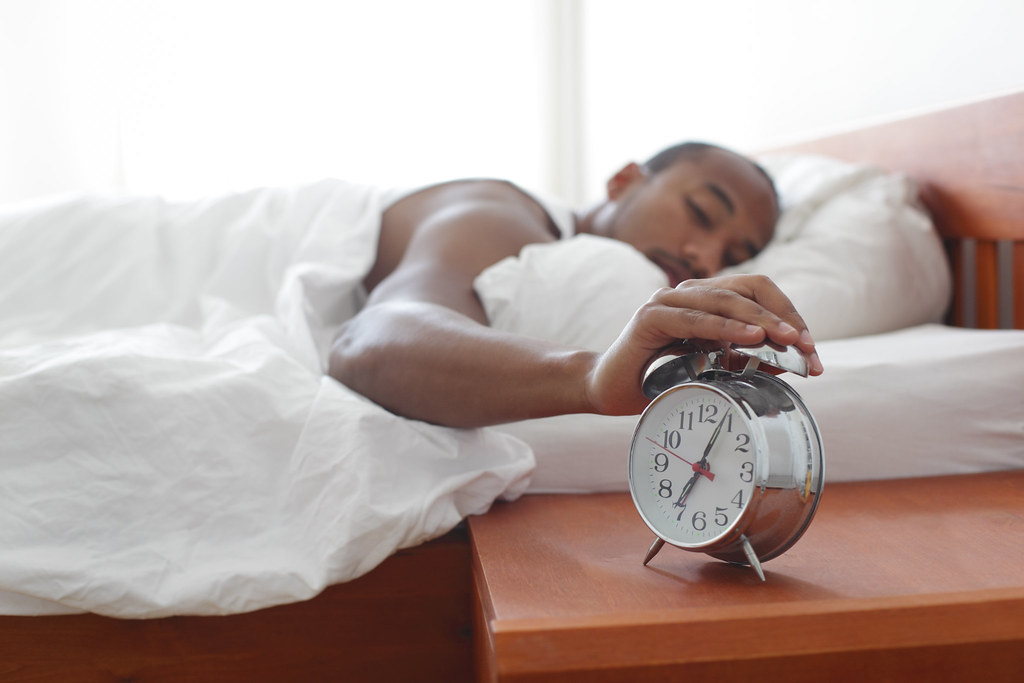
My last few posts have revolved around nutrition and weight loss – a topic about which I am very passionate. Without a doubt, nutrition and exercise are two of the most important aspects of living a long and healthy life. But there is a third major pillar of good health about which patients frequently come to me for advice: how to sleep better.
Treating insomnia is a complex topic, and there is no way that I can do it full justice in this blog, and certainly not in one blog post. Accordingly, I am going to dedicate a few separate posts to just my most basic rules around better sleep. Many people will find they start sleeping at least a little bit better simply by following these, whereas others will need more advanced help. So, don’t expect any miracles from reading just this post, but if you follow this and my next few posts, it should at least get you started in the right direction. As JFK famously said: “All this will not be finished in the first one hundred days. Nor will it be finished in the first one thousand days . . .nor even perhaps in our lifetime on this planet. But let us begin.”
If you are worried about your sleep, I will start by asking you the same question I always start with when evaluating a patient who complains of insomnia: is your sleep in fact that bad?
I want to be clear that when I ask this that it is not done in a dismissive way. If a patient feels their sleep is a problem, then it’s a problem. However, I have been frequently surprised over the years at how often a person’s sleep is in fact better than they think it is, and that the only reason they are concerned about it is because they read or heard something about how much sleep they should be getting and are worried about the fact that they don’t conform to that norm.
In recent years, there has been a lot of increased attention to the need for better sleep in our society, as well as the connection between poor sleep and a host of chronic diseases, including depression, dementia, heart disease, obesity, and even cancer.
In many ways this has been a good thing – far too many people stay up late at night so they can binge watch their favorite Netflix shows, instead of making a good night of sleep a priority. Making such persons aware that this habit can harm their health is all to the good.
However, there is a downside to all of this attention: it has increased many people’s anxiety about sleep.
Let me provide a few examples from my practice over the years:
A middle-aged man came to see me about his sleep. He had slept about seven hours per night his whole life, had plenty of energy, felt great, and was in excellent health. But he had read that getting less than eight hours per night is dangerous, so now he was concerned. I reassured him that he needn’t be. There is a lot of variety between people as to how much sleep they need, and typically anywhere from about six to nine hours is fine, as long as you wake up feeling refreshed and in good spirits most days. There is simply no compelling data that people who sleep for eight hours per night live longer or healthier lives than those who sleep for seven hours, for example, but the “fact” that we are supposed to sleep for eight hours per night has become ingrained in the popular conscience and causes many people anxiety.
Another patient grew very concerned after a week of poor sleep that occurred for no apparent reason. I reassured him that we all have periods of bad sleep, and this was not yet at the point where it needed any medical attention. Not long after, he called me to report that his sleep had gone back to normal.
A woman in her sixties came to see me about her sleep. Her whole life she had gone to bed at 10pm so she could try to wake around 6am in time to go to work. She had always had difficulty sleeping. Then she retired, and now she was on her own schedule. She typically now stayed up past midnight reading books and playing cards, then went to bed and slept “like a baby” until 9am, waking up feeling great. She was alarmed that she was going to bed too late, but left reassured after I told her that some people are more naturally wired to be “night owls” rather than “early to bed, early to rise,” types, and that in fact this schedule seemed to be working much better for her than her old work schedule had.
Another man told me he was concerned because he tended to sleep only six hours per night. But crucially, he woke up feeling fine, and then took a one hour nap in the early afternoon, after which he also felt great. He had always done this, and it had never seemed to bother him. I pointed out to him that this is in fact the typical sleeping pattern in many parts of the world (ever hear of the “Siesta” in Spain?) and that there’s nothing wrong with sleeping this way if it worked for him.
Yet another woman came to me describing the following pattern: every night she went to bed at 10pm, fell asleep promptly, and slept “like a log” until 2am. Then she woke up and got out of bed and did some reading. Around 3am she went back to bed and again slept soundly until 7 am, when it was time to get up for work. I pointed out to her that this equaled 8 good hours of sleep per night. “Do you feel well most days?” I asked her. She indicated that she did. “Well then, keep doing what you are doing,” I advised her. And in point of fact, there is a lot of historical evidence that this “split” way of sleeping was quite normal before the industrial revolution put us all on the same work schedule.
I could go on at length, but you hopefully get the idea.
There is no one right way to sleep. Just as some humans are taller and some are shorter, some have red hair and some have brown, some have exceptional singing voices and others can’t carry a tune, we all sleep a bit differently.
If, in an average twenty-four hour period, you sleep 6 or more hours, and you feel fine most of the time, then you don’t have any kind of major sleep issue. Even if your sleep patterns seem “weird” compared to the rest of the folks you know, if they are working for you, they are no cause for concern. If every now and then you have a bad night or a bad week of sleep – it happens, and you don’t need to get too alarmed by it.
Sleep difficulties almost always contain a component of anxiety (“Why can’t I fall asleep? Will this be another bad night?” the insomniac typically asks themself as they lie tossing and turning in bed) and therefore the worry of thinking that you are a bad sleeper can become a self-fulfilling prophecy of sorts. That is why reassurance that your “abnormal” way of sleeping may not actually be a problem can in and of itself be curative, and why I always start a sleep evaluation by considering this possibility.
But there’s another good reason to start becoming aware of the fact that you are probably a better sleeper than you think you are.
The lesson? If you walk around thinking that you are at least a decent sleeper, the odds are good that you will feel and perform a lot better than if you walk around feeling stressed out about how bad your sleep is.
Whenever you are feeling dissatisfied with your sleep, start by taking an objective look at how you are doing. Remember that there are great variations between how much sleep different people need, and even for the same person at various stages in their life. Then ask yourself the key question: “is my sleep really that bad? Or am I just having unrealistic expectations about it?”
If after reading the above you feel reassured, you can probably skip my next few blog posts. But if not, then stay tuned – I promise I will actually give you some tips to improve your sleep in the coming posts.