This post is just for fun, and light on science. So if you’re looking for something firm to hang your hat on, skip it. On the other hand, if you want to be bored by my personal thoughts, read on.
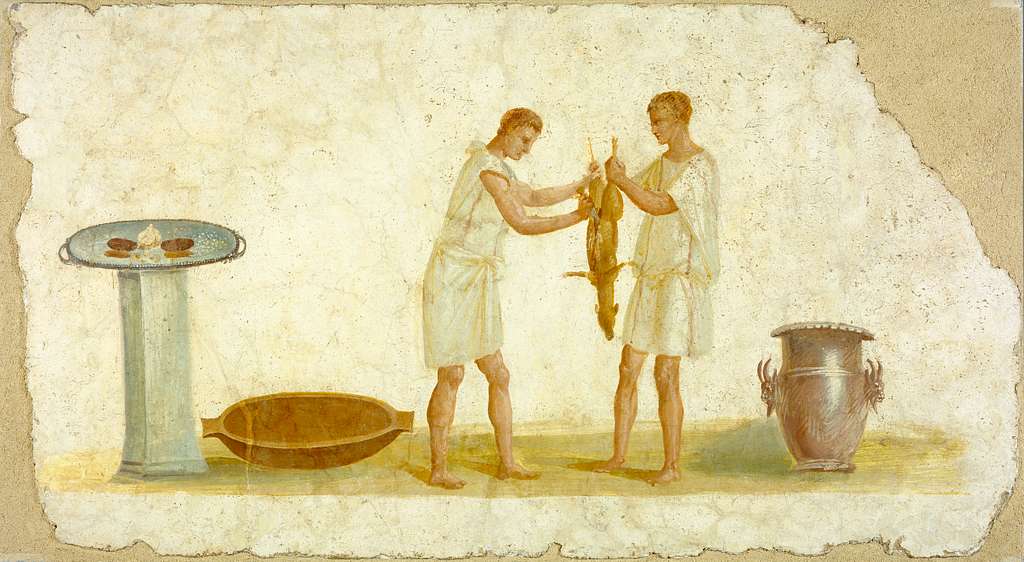
Today, I’d like to briefly return to this topic by discussing how the ancient Romans ate. But before doing so, I want to make two points:
The ancient Romans lived, on average, much shorter lives than we do. So it’s not that we should copy their world completely.
But as the old saying goes, there are “lies, damned lies, and statistics,” and in point of fact a major reason that average life expectancy in Rome is estimated to have been about 30 years is that roughly half of all people in the Roman empire died in childhood. Of those who did survive to adulthood, many young women died in childbirth, and many young men died of traumatic injuries (being a Roman soldier, or building aqueducts by hand, turns out to have been dangerous work). As a result, an enormous percentage of the population died at a very young age, which brought the average life expectancy down considerably. But of those who didn’t die young, many went on to live a fairly full life, and in point of fact quite a few Romans lived into their 60s, 70s, and 80s. And while we have no way of knowing exactly what happened to these folks, there are many lines of evidence to suggest that they suffered less than we do from obesity, diabetes, cancer, heart disease, or dementia. The point being, there might be some things these ancient folks can teach us about how to age well, despite the fact that the majority of them never got the chance to.
Secondly, I am using Rome only because it is such a cultural touchstone of ours, but there’s nothing unique to Rome in what I am discussing. Substitute in any other pre-modern civilization – the Persians, the Ottomans, feudal Japan, or whomever you choose – and you could likely draw a lot of the same insights.
If we think about this pattern, we’ll note a few things. Firstly, that it contains no processed or packaged foods (duh). Secondly, the diet is high in fiber and plant matter. Third, it is low in sugar (in fact the Romans didn’t have table sugar the way we do, though they did eat fresh fruit and honey to satisfy their sweet tooth). Fourth, it contains a fair amount of fermented foods (sourdough bread, cheese, wine), which we now know helps to nurture a diverse and healthy gut microbiome. Fifth, it is not per se low fat, but it is low in saturated fats and, of course, is completely devoid of the industrial and processed oils that are common in the modern western diet.
In fact, if we examine the above diet, we’ll note that it is pretty consistent with the dietary pattern that modern nutritionists call the “mediterranean diet,” still followed in many parts of Greece, Italy, Spain, and other mediterranean countries, and which numerous studies have shown is a healthy eating pattern for reducing the risks for obesity, diabetes, and cardiovascular disease.
Therefore, one way to look at healthy eating patterns is that they are something to be discovered by modern scientists. But another is that they are something to be re-discovered from our pre-modern ancestors who by a mixture of intuition and limited options (Burger King, sodas, and packaged chips just weren’t available to anybody living prior to a few decades ago) tended to follow, at least in some regards, a healthier eating pattern than we do.
One suggestion I often give my patients is to forget for a moment about fat, calories, protein, etc, and simply try never to eat a food that didn’t exist a century ago. If you follow no rule other than that, you will likely have a healthier diet than about 90% of modern Americans.
Gratitude to my wife (and office manager) for sharing this interesting study, published in 2022, with me.
Researchers at Penn State University randomly assigned 235 post-menopausal women to either eat 50 grams of prunes (aka dried plums) or not every day for a year. For context, 50 grams of prunes is about six prunes per day. After a year, they found that the women eating the prunes had better bone mineral density, and an accordingly lower estimated risk for bone fractures, than the women who weren’t.
In other words, doing absolutely nothing other than adding six prunes per day to your diet might be a tool to keep your bones healthy, at least in post-menopausal women.
As my patients – and regular readers of this blog – know, one of my frequent recommendations for better health is to increase the intake of dietary protein. Dietary protein is satiating, which tends to lead to lower overall caloric intake, and thus less fat mass. At the same time, dietary protein supports muscle mass, particularly when combined with a regular program of physical activity. The combination of less fat and more muscle leads to lots of desirable outcomes, from improved health (lower blood pressure, lower blood glucose, improved metabolism, lower risk for frailty with aging) to a more visually appealing body aesthetic. Does this strategy work for everyone? No, we’re all unique. But for a lot of people it’s quite helpful.
However, frequently when I make this recommendation to patients, I am met with one particular concern: “won’t all of that extra protein harm my kidneys?”
Last year, I blogged in two separate posts about research into the topic of heart health and the keto diet. Now a follow-up study on this research has been published which sheds some important light on the topic.
Before getting into this new research, it would be worth your time to read (or re-read) my two prior posts on this topic, which can be found by clicking here and by clicking here.
One of the popular strategies for weight loss over the past decade has been intermittent fasting, or as some researchers call it, time restricted eating.
In case you don’t know what this is, it’s simply setting a restricted schedule around when you eat and when you don’t. Studies have shown that the typical American spends more than 15 out of every 24 hours in a “feeding” state, meaning that they eat shortly after waking in the morning, and then consume multiple meals and snacks throughout the day right up until shortly before bedtime. As a result, the longest stretch they ever go without eating in a typical day is no more than 9 hours, most of which consists of the time they are asleep overnight.
By contrast, somebody who is intermittent fasting might follow one of the following schedules:
Before doing so, I just want to clarify my point of view about this: I am not suggesting that butter is a health food, nor that you might not be better off eating less of it. The balance of the evidence, for example, strongly suggests that good quality olive oil is much healthier for you than butter. So please don’t read this post and walk away thinking that butter is unambiguously good for you and that the more of it you eat the better, as is promoted by some health influencers on the internet.