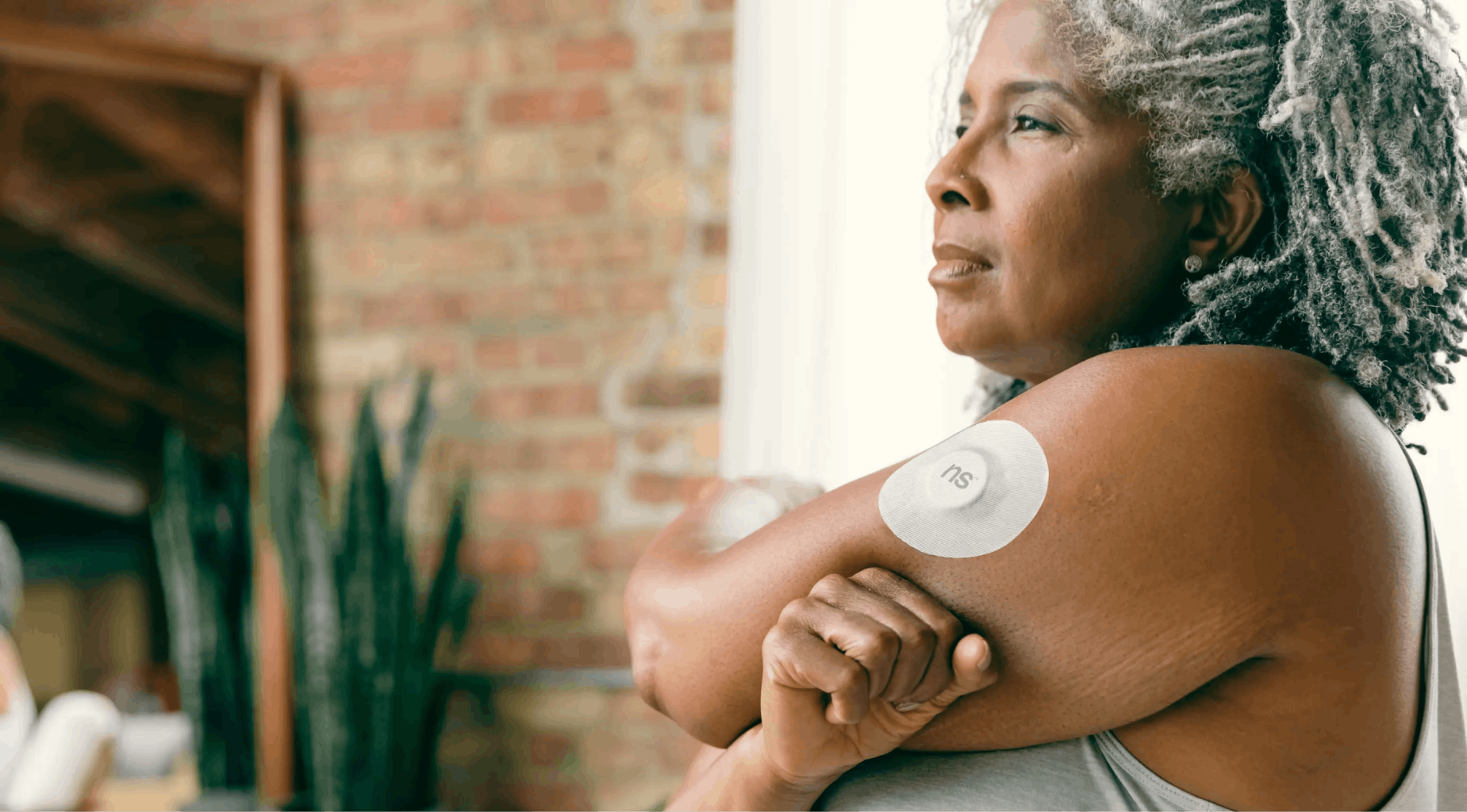
One of the tools that I’ve gotten more interested in the past few years are Continuous Glucose Monitors (aka CGMs). These are patches that can be painlessly applied to the arm and that sync to an app on your phone, providing continuous information about your glucose levels. While they are not 100% accurate, they are close enough to more traditional methods for checking glucose (e.g. fingerstick) to give a pretty close estimate of your blood glucose at any particular moment, and since they can provide hundreds or even thousands of data points per day, can be used to track trends and see patterns.
Until now, these devices have only been available by prescription and – not surprisingly in our broken “sickcare” model – often not paid for by insurance until a patient has advanced diabetes. This is a shame because, while these devices are of course very helpful to diabetics, I think their real power lies in helping healthy people gain insights into their metabolism so they can prevent things like the development of diabetes in the first place.
In the past few years, a movement of “biohackers” has begun to use these devices regularly, and the insights gained are fascinating. Otherwise perfectly healthy people will often, it turns out, have vastly different blood glucose responses to the same food. Or the same person will have a different response to the same food based on factors like how they slept, what their stress levels are, whether or not they are sick, what time of day they are eating, whether or not they have exercised, and so forth.
Does fruit send your blood sugar sky high, or is it great for your metabolism? Are you better off on a low-carb diet, or are you one of those folks who has better blood sugar eating plant based? The answers are different for each person, and CGMs can help provide this information.
And now it’s going to get easier, because just the other day I saw an ad for the first over-the- counter CGM (link here). I have no experience with this device and am not particularly endorsing it, but I think it’s a really positive development that this type of technology is becoming more available and more affordable. If more people were to gain insight into their blood sugar and learn how to best manage it for their own body, it would do more to prevent and treat diabetes than any blockbuster medication the pharmaceutical companies have ever cooked up.