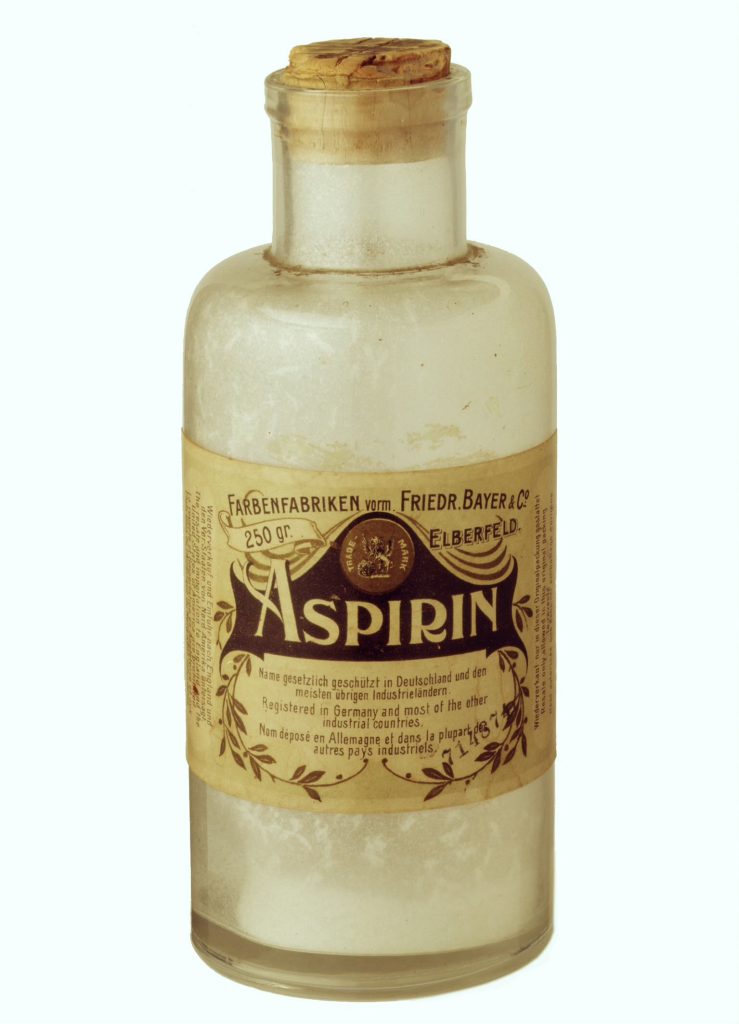
Aspirin has been around for a very, very, long time. The ancient Egyptians and Greeks used extracts of the willow bark tree – which contains salicylic acid, aspirin’s active ingredient – as a remedy for pain and fever. Then in the 1800s, chemists figured out how to manufacture a concentrated version of this substance and market it as the pain reliever we call aspirin. Right up through the 1950s, aspirin remained the most popular medication for pain, fever reduction, and inflammation. But with the advent of better medications like acetaminophen (Tylenol) and ibuprofen (Advil), aspirin’s popularity began to wane. Thus the first act in aspirin’s long story came to a close.
Before I go any further, let me just define terms here. Resistant starch is starch that your body cannot absorb. It therefore passes through the digestive tract and out into fecal waste without significant entry into the body, but in so doing it provides food for intestinal microbes, and therefore has been demonstrated to support a healthier and more diverse microbiome. Some natural sources of resistant starch include whole grains, potatoes, beans, and unripened fruit. By contrast, non-resistant starch is starch that your body absorbs and quickly converts into sugar for energy. Common sources of non-resistant starch include breads and pasta.
As regular readers know, I’m a big advocate of exercise. I’m also non-dogmatic about the topic. Since people are much more likely to do well with – and stick to – a program they enjoy, I think it’s more important to regularly move your body in some way than to rigidly advocate for a specific program. If you love running, you should run. If you go to a yoga class that you really enjoy, you should do yoga. If you like lifting heavy things, you should strength train.
That doesn’t mean however that there aren’t specific benefits to different types of exercise, nor that you aren’t better off with a well structured approach to fitness. The “best” fitness program includes components of strength work, of mobility work, and of various types of cardiovascular fitness. If you enjoy all types of exercise and/or will stick to whatever plan is “the best” without regard for your personal preference, then a mix of something like yoga, weight lifting, and running is probably better than doing only one of those activities. But if the only exercise you will consistently do is to take long bike rides, I’d much rather you ride your bike regularly than do nothing at all because you are bored or overwhelmed by the other options.
On the topic of “the best” exercise program, I’d like to get a bit more granular today and review one question regarding exercise in particular: what is the “best” workout program to lower blood pressure.
Crohn’s disease, in case you aren’t familiar, is a type of “Inflammatory bowel disease,” in which an autoimmune process causes severe inflammation throughout the digestive tract, leading to abdominal pain, bloody stools, malabsorption of nutrients, and other serious and sometimes life-threatening complications. Like many autoimmune diseases, it has become more common over the past few decades, which strongly suggests (since our genetics have not, as a species, changed during that same time period) that environmental triggers such as pollutants, changes to our gut microbiome, stress, and poor diet likely play a role in its development.
This new study, conducted by a group of doctors in Canada, bolsters this idea. After all, if changes in the way we live can cause Crohn’s disease, then it follows that changes in the way we live should also help to alleviate it.