In my last blog post, I took the New York Times to task for incorrectly suggesting that new research demonstrates a connection between alcohol consumption and the rise of cancer in younger adults. And then just a few days after I wrote that, a patient asked me my thoughts on the health risks of alcohol. So I thought I’d dedicate a post to the topic.
Let’s start with a simple fact: alcohol is toxic to the human body. There is now a lot of research to suggest that even moderate alcohol consumption may play a role in the development of some cancers and in neurological disease. It’s also well established that alcohol consumption is tied to an increased risk for atrial fibrillation, a common type of heart arrhythmia that can increase the risk of having a stroke. And the longstanding belief that moderate alcohol consumption is protective against cardiovascular disease has not held up under closer scrutiny. No, one glass of red wine per night will not cut your risk for a heart attack, and wine consumption is not the reason that countries like France, Italy, and Greece have lower rates of heart disease than we Americans do.
Add to this the long established fact that heavy alcohol consumption is terrible for the body, and substantially increases the risk for liver, cardiac, and brain disease, and we can reasonably conclude that alcohol is bad for humans. Period, full stop. And looked at purely as a substance examined in isolation, this is a correct conclusion. However…
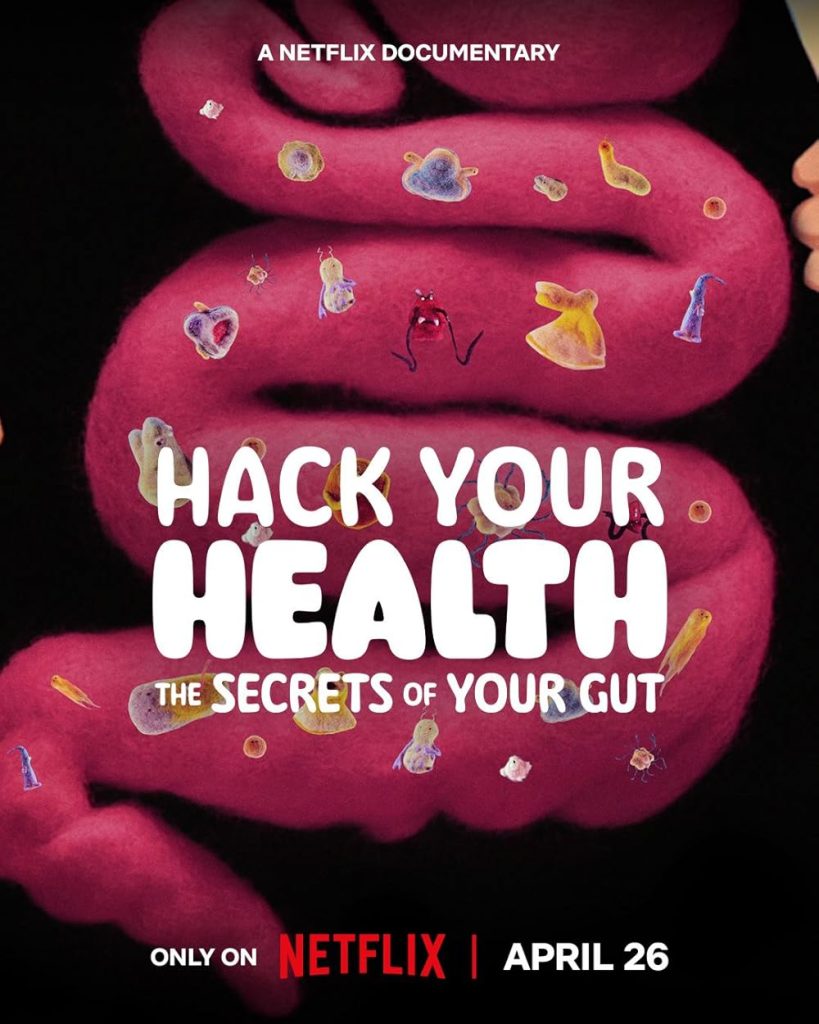
Recently I watched the documentary “Hack Your Health,” which is available for streaming on Netflix. The film covers the emerging science of the gut microbiome (the population of trillions of bacteria, most either harmless or beneficial to human health) that live inside our GI tracts, and that are increasingly being found to play a role in everything from our tendency to gain weight, to our mood, to our risk for various chronic diseases.
I really wanted to like this film, because I think the gut microbiome is a fascinating and important emerging area in medicine, but the film suffered from some major flaws. Overall, I’d give it two out of five stars.
The photo above is one I took during my recent vacation to Germany. While stopping to tour a beautiful church in a picturesque small Bavarian town, we wandered into the adjacent cemetery and stumbled upon the gravestone of this local legend, who lived (in the 1700s, before modern medical care!) to the ripe old age of 117. I’ve been thinking of Herr Adner lately, because here in 21st century America, things are looking less rosy. After two centuries of unabated progress, in which the health and longevity of Americans slowly but steadily improved, Americans as a whole are getting sicker and dying younger than they were just even a few years ago. In 2019, the average life expectancy in the US was 79; now it’s down to about 76.
I met a new patient recently who was quite concerned about his cholesterol after his last doctor suggested he go on a statin. After discussing this patient’s medical history and reviewing his labs, it became obvious that he does NOT have a cholesterol problem, and certainly not one that warrants medication. This is a common scenario I run into in clinical practice, so I thought it would be useful to take a few minutes to run through some of the thought processes that a doctor should take when evaluating a patient’s cholesterol.
Without further ado, let’s delve in. Here are a few key points that are important to understand when thinking about cholesterol. Read through them, and then I’ll come back to the patient.
In my last post, I reviewed some of the background on how and why cholesterol came to be viewed as a risk factor for heart disease, and how this creates a clinical conundrum for those who go on a low-carb diet and see a big rise in their LDL (the “bad”) cholesterol but see every other aspect of their health improve. I discussed how there is a paucity of research on this particular population of patients and, hence, a lot of controversy about this topic. Then I introduced the work of Dave Feldman, a software engineer and internet personality who has been leading a grass roots research effort into this very topic. And I reviewed how Dave has proposed that maybe – just possibly – the metabolism of people on low-carb/keto diets is so different from that of a person following a more typical diet that cholesterol simply doesn’t behave the same way in their bodies, and hence the research we have until now suggesting that high cholesterol is a risk factor for heart disease might not apply to them.
I’m going to spend the rest of this post discussing a fascinating study that Dave and his colleagues just published which attempts to shed some light on this question. But first, let me stress that all of this remains theoretical, and – spoiler alert – we still do not know if having severely high levels of cholesterol due to a low-carb/keto type of diet is safe. One study does not a fact make, and most doctors would advise continued caution in this area. And while I do feel that the obsession on cholesterol and its treatment has had some real downsides (by emphasizing a laser focus on this one risk factor, while far more important risk factors such as metabolic syndrome/insulin resistance get ignored), it’s only fair to admit that there are still many, many, papers out there showing that – on a population level – there is a strong link between elevated cholesterol and cardiovascular disease risk. Please keep that in mind as you read the rest of this.