When it comes to food, the term “processed” is loosely defined. Technically it means any food that has in any way been altered from its absolutely natural state. Using this definition, simply cutting up a vegetable, peeling a potato, or cooking a piece of meat is technically “processing” the food. Going a step further, altering the form of a food – such as pressing olives to make olive oil, or fermenting milk to make yogurt or cheese – would be considered an even more aggressive form of processing.
However, the above foods have all long been part of the human diet (and by long, I mean thousands of years) and can be made with fairly primitive technology. These are not foods of concern, and indeed yogurt and olive oil both feature prominently in the “mediterranean diet” that has been well studied to have many health benefits.
Rather, when I talk about processed foods, I am referring to what might more specifically be termed “ultra-processed foods.” These are basically things that can only be made in a factory using modern production techniques and that were virtually unknown in the human food supply for most of history. As a general rule of thumb, you can be pretty confident that something fits this definition of processed if it meets ANY of the following criteria:
It is not something that you could easily create yourself in your own kitchen
It would not have been something that an average person living a hundred years ago would have ever encountered in their diet
It contains ingredients that you cannot pronounce
Using the above simple rules, it becomes clear that, unfortunately, the vast majority of the foods in our supermarkets meet the definition of processed food – including a huge number of foods that are marketed as being “healthy.”
I doubt that you will be surprised to learn that foods such as doritos, sodas, twinkies, and fast food products would qualify as a “processed food,” but I want to give some examples of how insidious this problem is by reviewing some “healthy” foods in the market that are, in fact, anything but.
Here for example is the ingredient list on a very popular brand of breakfast cereal that prominently features the fact that it is “whole grain” and can “help lower cholesterol” on its packaging:
You’ll note that after whole grain oats, the next most common ingredients are corn starch, sugar, salt, and tripotassium phosphate, all of which are in and of themselves unhealthy, and which are placed there specifically to make you want to eat more of the product.
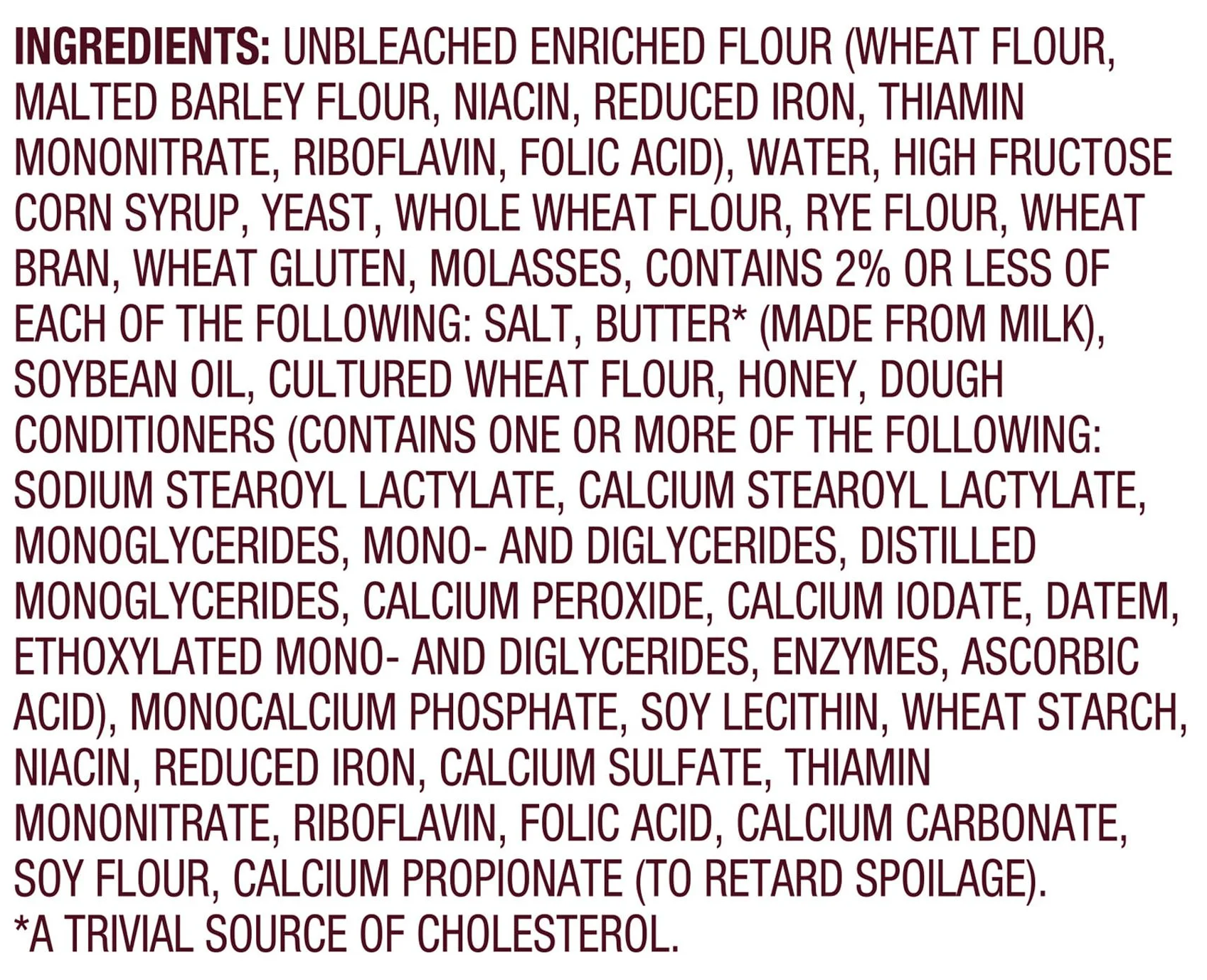
Here’s a label from a popular brand of whole grain “bread” that likewise touts its health benefits. I put the word “bread” in quotation marks, because this ingredient list has little in common with what most humans would have considered to be bread throughout history:
Finally, here’s a label from a popular brand of salad dressing that, again, prominently advertises its supposed health benefits:
Note the prominent placement of sugar, the use of soybean oil (which requires an industrial manufacturing process to produce), and the large variety of artificial preservatives.
I could play this game for hours, but I’ll stop here. Likewise I’m not going to review every single known adverse health effect of these ingredients. Many have been shown to enhance food cravings. Others to disrupt the gut microbiome. Others to cause blood sugar spikes. But you don’t need to memorize all of that.
Just remember to follow the basic rule: stick to minimally processed foods that would have been available to an average person living a century ago (fruits, vegetables, nuts, seeds, legumes, meat, fish, eggs, dairy, and, depending on your health goals, unprocessed whole grains such as brown rice or real oatmeal) and you will go a very long way toward improving your health and facilitating your efforts to maintain an appropriate body weight.